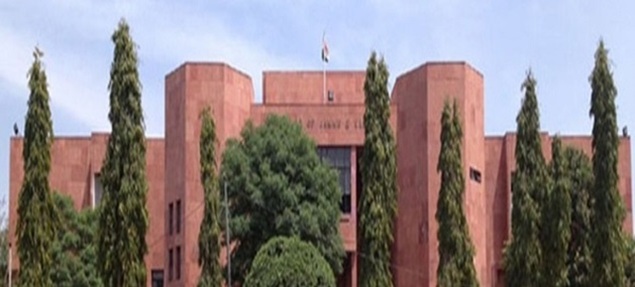
Jammu, Oct 22: In WP(C) 3252/2026 CM(7228/2026) CAV 2362/2026 titled UT OF J AND K TH COMMISSIONER SECRETARY REVENUE DEPARTMENT AND OTHERS V/s. BRIJ BALA AND OTHERS after hearing DB of HON’BLE THE CHIEF JUSTICE HON’BLE MR. MOHD YOUSUF WANI, JUDGE. ORDERED as under:-
1. The brief facts, as noticed by this Court, are that the respondents have been seeking regularization of their services as drivers in the petitioners’ department, having initially been appointed on an ad hoc/stop-gap basis from 1992/1994 onwards.
2. Ms. Monika Kohli, learned Senior AAG appearing for the petitioners, submits that the respondents were engaged on a stop-gap basis and, therefore, would neither fall within the definition of diarylated workers nor be entitled to regularization under the various applicable laws and Government orders, including SRO 64 of 1994, Government Order No. 1285-GAD of 2001, Government Order No. 168- GAD of 2004, as well as the Jammu and Kashmir Civil Services (Special Provisions) Act, 2010.
3. Ms. Kohli, further submits that one of the respondents has expired, while another has retired and, therefore, their services cannot be considered for retrospective regularization. She also submits that the law does not provide for any kind of retrospective regularization.
Learned Senior AAG further contends that the aforesaid orders do not contemplate regularization of drivers engaged on a stop-gap basis and, therefore, the same would not apply to the respondents.
4. Mr. Rahul Pant, learned Senior Counsel appearing for the respondents, on the other hand, submits that the respondents have rendered prolonged services in the department of the petitioners and have been working continuously since 1992/1994, except for minor artificial breaks created by the authorities to deprive them of regular appointment.
Learned Senior Counsel further submits that, on a conjoint reading of SRO 64 of 1994, Government Order No. 1285-GAD of 2001, Government Order No. 168-GAD of 2004 as well as the Jammu and Kashmir Civil Services (Special Provisions) Act, 2010, the respondents were entitled to regularization long ago.
Accordingly, there is no infirmity in the order passed by the learned Central Administrative Tribunal (CAT).
5. Learned Senior Counsel for the respondents has also placed reliance on the judgment of the Full Bench of this Court in UT Of Jammu and Kashmir through Commissioner Secretary to Government Forest Ecology Department Vs. Neeru Pandita, LPA No. 70/2022, decided on 11.08.2026.
The relevant portion of the said judgment reads as follows:
“23. In view of the above discussion, we answer the questions referred to this Full Bench as under:
(i) The first proviso to Section 5 of the Act of 2010 does not give the Government an unfettered power to decide the date of regularization of an eligible ad hoc, contractual or consolidated appointee. It has to be read together with the main provision of Section 5 and cannot be interpreted to mean that the Government is free to choose any date of regularization at its own discretion.
(ii) Section 10 is only procedural in nature. It lays down the procedure and the time-frame for processing cases of regularization. However, the period of 150 days cannot be read into Section 5 for deciding the effective date of regularization.
The right to regularization arises as soon as an employee fulfils all the conditions prescribed under Section 5 and cannot not be postponed till the expiry of 150 days.
(iii) Accordingly, neither Abdul Majid Magray nor Rabia Shah states the correct legal position in its entirety.
Judgment in Abdul Majid Magray’s case is overruled to the extent it holds that regularization takes effect only from the date on which the formal order of regularization is issued.
Judgment in Rabia Shah is approved insofar as it holds that the Government cannot postpone regularization at its own will and that the right to regularization accrues on fulfillment of the statutory conditions.
However, it is overruled to the extent it holds that regularization becomes effective only after the expiry of 150 days by reading Section 10 into Section 5.
6. This Court finds that the order passed by the learned CAT does not suffer from any infirmity, as it is an undisputed factual position that the respondents have been continuously working as drivers since 1992/1994, except for minor artificial breaks initially created by the authorities.
7. This Court finds that the SRO 64 of 1994, Government Order No. 1285-GAD of 2001, Government Order No. 168-GAD of 2004 as well as the Jammu and Kashmir Civil Services (Special Provisions) Act, 2010, have been considered conjointly by the learned CAT, and none of the aforesaid provisions disentitles the respondents to the benefits of regularization.
As regards the death of one respondent and the retirement of another is concerned, the same would not, by themselves, defeat their claim, as the right to consideration for regularization under the aforesaid provisions arises upon completion of the requisite seven years of service.
Accordingly, the respondents are entitled to the benefits admissible under the applicable provisions.
The judgment in Jaggo Vs. Union of India and Others, relied upon by the learned CAT, is also applicable to the present case
The Full Bench judgment of this Court in UT of Jammu and Kashmir through Commissioner Secretary to Government, Forest Ecology Department Vs. Neeru Pandita (supra) also gives strength to the proposition laid down by the learned Central Administrative Tribunal (CAT).
8. This Court does not find any ground warranting interference with the impugned order passed by the learned CAT, which is in consonance with the benefits extended by the authorities themselves while implementing SRO 64 of 1994, Government Order No. 1285-GAD of 2001, Government Order No. 168-GAD of 2004 as well as the Jammu and Kashmir Civil Services (Special Provisions) Act, 2010.
Accordingly, no interference is called for, and the appeal is dismissed.
|