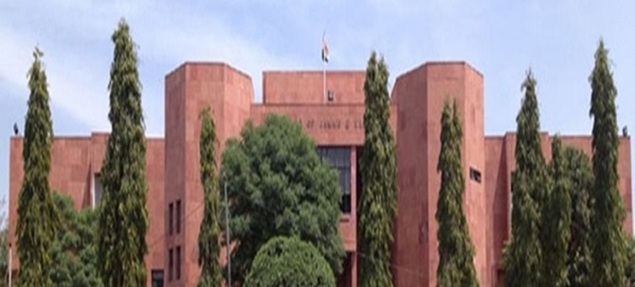
SRINAGAR, May 20: In a major structural reform aimed at optimising judicial administration and enhancing operational efficiency across the region, the High Court of Jammu Kashmir and Ladakh has officially notified a comprehensive set of guidelines titled “The Jammu Kashmir Court Manager (Appointment and Condition of Service) Rules, 2025.”
Issued by the Office of the Registrar General under Notification No. 1300 of 2026/RG, dated May 19, 2026, the statutory rules were framed by the Chief Justice under the powers conferred by Article 229 of the Constitution of India and have received formal approval from the Lieutenant Governor of the Union Territory of Jammu and Kashmir.
Coming into force immediately upon their official publication in the Government Gazette, this landmark framework shifts administrative burdens away from judges, placing specialised management professionals in charge of technical, logistical, data, and infrastructural domains across both high and subordinate courts.
The new rules outline a total sanctioned strength of 24 gazetted positions of Court Managers, which were previously established under Government Order No. 5626-JK(LD) of 2026 on April 27, 2026.
Structurally, the positions are distributed to ensure deep regional penetration, with 22 posts designated for the Union Territory of Jammu Kashmir and two posts allocated to the Union Territory of Ladakh. Within Jammu Kashmir, one Court Manager will be deployed to each of its 20 individual districts, alongside two central positions divided between the Jammu and Srinagar wings of the High Court. Similarly, Ladakh’s two posts will provide one dedicated administrative manager for each of its two districts. Mirroring the financial status of other critical union territory personnel, these gazetted roles carry a competitive Level-6F pay scale within the 7th Central Pay Commission framework, supplemented by
standard regional allowances.Historical Kashmir documentaries Discover more Daily news updates Political commentary subscription Recruitment for these coveted administrative seats will be strictly merit-based, governed by the joint recommendations of the High Court and the Jammu and Kashmir Public Service Commission.
The selection protocol will strictly mirror the established operational pipeline used to appoint Civil Judges (Junior Division), adhering closely to Rule 10(2) of the Jammu Kashmir Civil Services (Judicial) Recruitment Rules, 1967.
To be eligible for consideration, a candidate must be a citizen of India and a certified domicile of either the Union Territory of Jammu Kashmir or the Union Territory of Ladakh, backed by a valid certificate issued by a competent authority in the prescribed format.
Candidates must fall within a strict age window, possessing a minimum age of 25 years and a maximum age of 37 years, though upper age limit relaxations for Scheduled Castes, Scheduled Tribes, Other Backward Classes, and Persons with Disabilities will continuously align with evolving government policies.
Professionally, candidates must hold a Master’s Degree in Business Administration from a recognised Indian university or institution, coupled with at least five years of direct working experience in process management, IT systems management, human resource management, or financial management, while holding a separate degree in Law is considered a highly desirable asset.
The selection mechanism itself relies on a rigorous two-phase examination process. Phase one consists of a written examination containing two separate objective multiple-choice papers, each lasting two hours.
Paper one, which accounts for a maximum of 200 marks, comprehensively evaluates core organisational expertise, including an introduction to management, communication, organisational behaviour, quantitative techniques, research methodology, financial management, and human resource management.
Paper two, also featuring a maximum of 200 marks, shifts focus towards foundational operational knowledge, testing general knowledge, English, legal knowledge, computer skills, and general aptitude.
Candidates who successfully clear the written threshold progress to phase two, which consists of a personal interview and viva voce carrying a maximum of 100 marks.
Crucially, the regulations mandate a provision for minimum qualifying marks across every individual written paper and the final interview stage; failure to meet these exact benchmarks will result in immediate disqualification from further consideration or appointment.
|