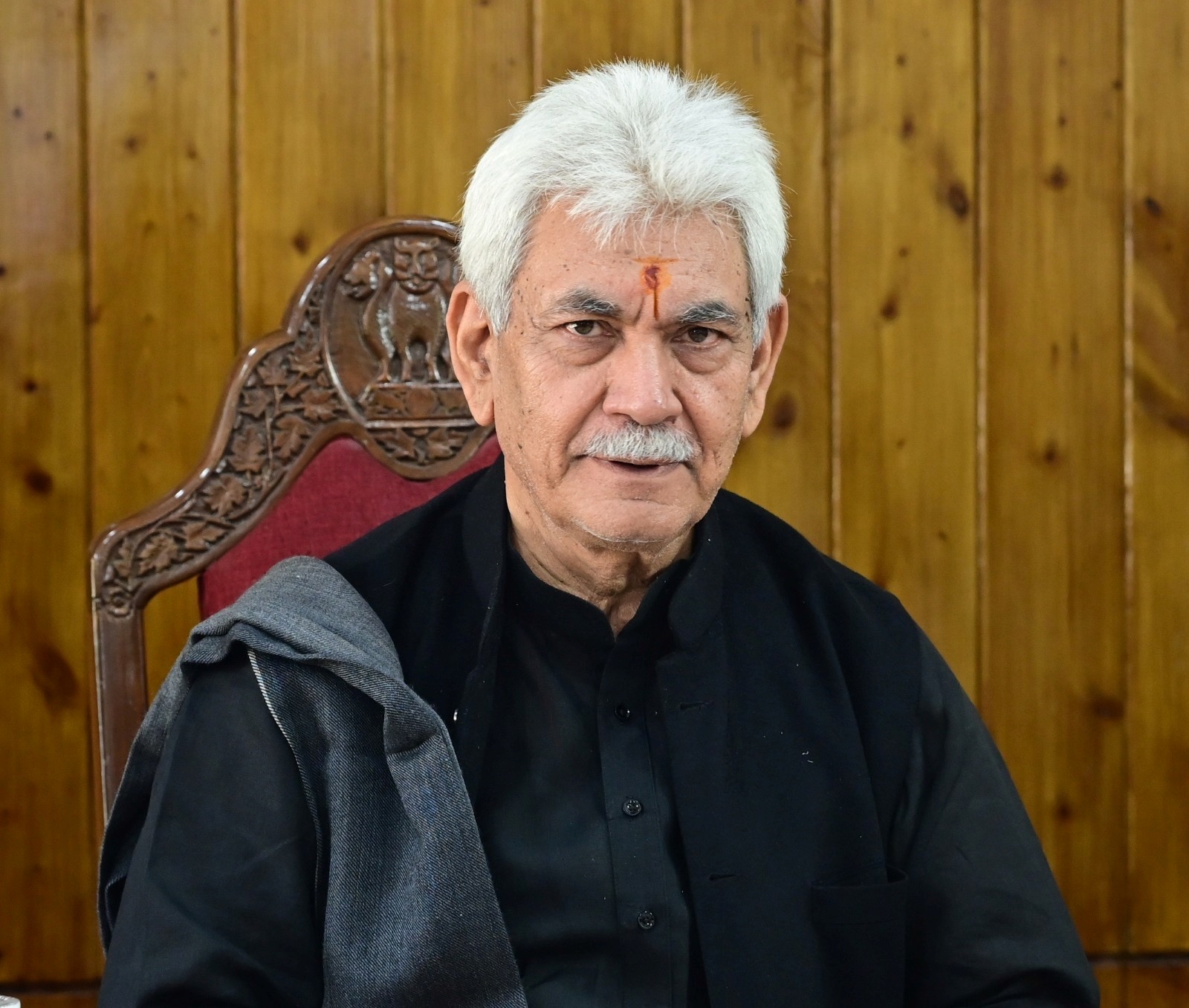
JAMMU, Feb 02: Full Address of LG J&K Manoj Sinha on Budget session to J&K Legislative Assembly .
” Hon’ble Speaker, Hon’ble Members of this August House,
1. It is my privilege to address this august House at the commencement of the Budget Session of the Legislative Assembly. This Session holds special significance, as it offers an opportunity to reflect on our collective journey, review our achievements, and chart a clear roadmap for the future. It also provides a moment to reaffirm our shared commitment to fulfil the aspirations of the people of Jammu and Kashmir.
2. For me, this occasion represents not merely an accounting of resources or outcomes, but a reflection of our vision for a prosperous, inclusive, and resilient Jammu and Kashmir. I extend my sincere gratitude to every citizen contributing to this transformation—our farmers, workers, artisans, youth, women, entrepreneurs, educators, healthcare professionals, security personnel, and public 1servants. Their dedication and perseverance constitute the bedrock of our progress.
3. The past year marks a significant milestone in the democratic journey of Jammu and Kashmir with the formation of an elected Government after a gap of several years. This transition to popular governance have strengthened public faith in democratic institutions. My Government has focused on restoring participatory governance, rebuilding public confidence, and ensuring that the voice of every region and community finds expression in policy making. 4. The development trajectory of Jammu and Kashmir continues to be guided by the foundational principles of Economy, Ecology, and Equity.
These principles are not merely aspirational, but serve as the guiding framework for policy formulation and implementation. While notable progress has been achieved across sectors, the Government remains conscious of the need for sustained and focused efforts to ensure balanced, inclusive, and environmentally sustainable development. 25. Good governance continues to be the cornerstone of the Government’s development strategy in Jammu and Kashmir. Sustained reforms in transparency, accountability, digital governance, and citizen-centric service delivery have significantly strengthened public trust and institutional efficiency. The digital transformation has imparted new momentum to development and reinforced corruption-free governance, with over 1,500 public services available online and 391 services integrated with the auto-appeal system to ensure timely delivery. 6. During the last one year, the Government has placed renewed emphasis on responsive and people-centric administration. Regular public grievance redressal meetings at the Chief Minister’s outreach Office and the strengthening of JK Samadhan portal have ensured that governance reaches the doorstep of citizens. Thousands of grievances have been resolved through time-bound interventions, reinforcing trust between the Government and the people.
37. During the previous year, the Union Territory recorded 82 crore e-transactions, averaging over 22 lakh transactions per day, while 128 services have been integrated with DigiLocker. Complete Aadhaar seeding of welfare beneficiaries has enabled seamless Direct Benefit Transfer, under which ₹9,000 crore has been credited directly to the accounts of 80 lakh beneficiaries through 77 DBT-based schemes in the current financial year. Complementing these efforts, a comprehensive AI strategy is being formulated to drive innovation and efficiency across priority sectors including healthcare, agriculture, mobility, education, and law enforcement.
8. The economy of Jammu and Kashmir has demonstrated encouraging momentum in recent years. The Union Territory is presently recording an annual nominal growth rate of around 11 percent (2024-25), reflecting the positive outcomes of sustained policy reforms, enhanced infrastructure development, and proactive investment facilitation. The Government remains 4committed to consolidating this growth trajectory through strengthened fiscal discipline and by creating diversified and sustainable employment opportunities, with particular emphasis on youth and women.
9. Jammu & Kashmir is one of the fastest-growing States/UTs in the country. GST revenue collection has shown steady growth from Rs. 8064 Cr. in 2023-24 to Rs. 8586 Cr. in 2024-25. Tariff from electric power has witnessed a substantial increase of 16% in 2024-25. 10. Special Assistance to States for Capital Infusion (SASCI) for interest free loans for capital investments has been extended to J&K from the current financial year. Under SASCI, Rs. 1,431 crore has been sanctioned for 222 projects and Rs. 210 crore as matching share for 12 centrally sponsored schemes. First instalment of Rs. 1,083 crore (66% of sanctioned amount) has been received. 11. With support of UT Government, Jammu and Kashmir Bank has undertaken various reforms 5for professionalization of management, meritocratic selection of top posts and capital infusion. This has resulted in turnaround of the Bank by improving the net NPA and improved its capital adequacy. 12. Infrastructure development continues to be a critical driver of economic transformation in the Union Territory. The road sector in the Union Territory has witnessed unprecedented investment amounting to ₹61,528 crore, encompassing expressways, National Highways, ring roads, and tunnels, significantly enhancing regional and inter-regional connectivity. Three major tunnels, including the Sonamarg Tunnel, have been completed, while eight others, including the strategic Zojila Tunnel, are at advanced stages of completion. The Narbal–Shopian–Surankote road has been declared a National Highway, further strengthening all-weather connectivity across the Pir Panjal region. 13. In addition, 19 new National Highway Projects with an estimated cost of ₹10,637 crore have been sanctioned for 2025–26, which include 6key infrastructure works such as the Pir Ki Gali Tunnel, Sadhna Tunnel, Lal Chowk–Parimpora Flyover, and Magam Flyover, aimed at decongesting urban centres and improving mobility. 14. My Government places on record its deep appreciation to the Government of India for the launch of PMGSY-IV, which will ensure road connectivity to 2,400 unconnected habitations. Under Phase-I of this programme, 316 projects involving an investment of ₹4,224 crore have already been sanctioned, covering a total road length of 1,781 kilometres. 15. In a historic milestone, the Kashmir Valley has been connected with the rest of the country through the railway network, opening new avenues for trade, tourism, and economic progress. A full-fledged Railway Division has also been sanctioned for Jammu & Kashmir and expansion and modernization of Jammu Tawi Railway Station is under progress.
16. The first-ever FCI food-grain freight train to Kashmir has been operationalised, integrating 7the region with the national freight network and ensuring year-round logistics, reduced pressure on NH-44, and faster economic activity. 17. The expansion of Jammu Airport is progressing steadily, and the introduction of evening flight operations has further strengthened air connectivity. 18. Power sector has been one of the priority sectors of my government which is witnessing structural transformation. Major Hydropower Projects—Pakal Dul, Kiru, Kwar, and Ratle, with a combined capacity of 3,014 MW, are under active execution. Over the past five years, a record 5,708 MVA has been added to the distribution sector and 4,239 MVA to the transmission sector. Installation of smart prepaid meters is underway in mission mode, with 10.44 lakh smart meters already installed, and 100% coverage targeted by 2026–27. As a result, losses have been reduced by 9%, while revenue realization has increased by 16%.In parallel, the solarisation of government buildings and households under the PM Surya 8Ghar Muft Bijli Yojana is further strengthening the Union Territory’s renewable energy footprint. Over 6,700 government buildings and more than 16,800 households have been solarised, reducing electricity costs and enhancing energy security. 19. Recognising the hardships faced by citizens, especially during winter months, the Government undertook daily monitoring of power supply and directed targeted interventions to ensure better electricity availability. Special focus was laid on uninterrupted supply during religious occasions, examinations, and peak winter/summer months. A transparent schedule based power distribution mechanism was put in place to minimize inconvenience to consumers.
20. On the recommendation of J&K Government, the Ministry of New and Renewable Energy, GoI, has accorded approval to a project for providing 200 free units of electricity to 2.23 lakh AAY families of Jammu and Kashmir under PM Surya Ghar Muft Bijli Yojna- Utility Led 9aggregation (ULA) model. Implementation is going to start soon. 21. My Government is making efforts to provide safe, adequate, and sustainable drinking water to every household through Jal Jeevan Mission. Majority of the rural households, have been provided tap water connections, marking significant progress towards universal coverage. Major infrastructure projects such as the Shahpur Kandi Dam and the New Pratap Canal reflect the Government’s sustained commitment to strengthening irrigation infrastructure and long-term water security in the region. 22. Tourism continues to be a vital pillar of the economy of Jammu and Kashmir. Despite challenges arising from security-related incidents and natural calamities, the Union Territory recorded 1.78 Cr. tourist visits in 2025. Recognising its potential, tourism has been accorded industry status to attract investment and generate employment. First ever Chrysanthemum Garden “Bagh-e-Gul-e- Dawood” has been thrown open for tourists 10 23. from October, 2025. With more than 50 vibrant varieties, this garden is a strategic cornerstone in our mission to transition Kashmir into a year-round destination. Just as the Tulip Garden defines our spring, Bagh-e-Gul-e- Dawood is set to become the definitive icon of our autumn, inviting the world to witness the beauty of Kashmir during the Autumn Season.
This is going to attract the Tourists in the Lean season. Recognizing tourism as a lifeline of Jammu and Kashmir's economy, the Government undertook confidence-building measures, improved facilitation, and strengthened coordination with stakeholders. Special efforts were made to revive pilgrim tourism in Jammu, adventure tourism in Kashmir and eco-tourism in tribal and border areas, ensuring equitable regional growth. My Government is going to introduce a major project for sustainable development of emerging tourist destinations with investment from Government funding as well as private sector participation to broaden the tourism footprint in Jammu and Kashmir. 11 This will generate employment opportunities and ensure that the benefits of tourism reach remote and unexplored areas. The programme will focus on developing new tourist destinations, promoting homestays, rural and border tourism, and encouraging community participation in tourism activities.
24. The Kashmir Marathon is a flagship initiative positioning the region as a premier sports and wellness destination. Following its 2024 debut, the 2025 edition grew significantly, attracting over 1,000 runners and international athletes from 11 countries. Besides, maiden edition of the Jammu Marathon is set for March 2026. 25. My Government is also focusing on revitalizing the agriculture and allied sectors through the Holistic Agriculture Development Programme (HADP), aimed at transforming traditional farming into a modern, diversified, and remunerative enterprise. Strengthening post- harvest infrastructure and market integration remains a key priority. Controlled Atmosphere (CA) storage capacity has increased to 2.92 lakh metric tonnes through public and private 12 investment, with an additional 15,000 MT being added this year, raising the total to 3.07 lakh MT. To improve returns, 17 mandis have been integrated with the e-NAM platform, registering 55,355 farmers, traders, FPOs, and stakeholders, and facilitating trade worth ₹1,680.34 crore involving 28.26 lakh quintals of agricultural and horticultural produce. 26. Crop diversification has gained strong momentum, with cultivated area expanding by 6.22 percent, from 12.71 lakh hectares to 13.50 lakh hectares. A focused effort to strengthen the seed ecosystem has improved the Seed Replacement Rate (SRR) from 12 percent to 22 percent, enhancing productivity and resilience. The Yellow Revolution has emerged as a significant income source in Kashmir, with oilseed area increasing from 1.4 lakh hectares to 2.1 lakh hectares, leading to doubling of production. Honey production has also risen sharply from 2,200 MT to over 3,895 MT in the last three years, placing Jammu & Kashmir among the country’s leading honey producers. Fish production has also recorded a 13 sharp acceleration of 16% from 25.40 thousand tonnes in 2021-22 to 29.40 thousand tonnes in 2024-25 highlighting the impact of targeted interventions. 27. To protect farmers from climatic and market risks, the Pradhan Mantri Fasal Bima Yojana has been implemented across all 20 districts. During Kharif 2025, over 2.01 lakh farmers were covered, and for Rabi 2025–26, coverage is proposed for nearly 40,000 hectares, supported by awareness and enrolment campaigns. Insurance coverage is also being extended to horticulture crops. 28. Kissan Khidmat Ghars have emerged as a key institutional support system, integrating over seven lakh farmers and enabling access to government services, welfare schemes, and expert advisories, thereby strengthening last- mile delivery. To preserve agricultural heritage, GI tags have been secured for seven products—Kashmir Saffron, Jammu Basmati, Bhaderwah Rajma, Sulai Honey (Ramban), Kalari (Ramnagar), Anardana (Ramban), and Mushkbudji rice—while 20 more products are at 14 various stages of registration. Further, SKUAST Jammu has established a state-of-the-art Ex- Situ Gene Bank, the third in the country, for conserving valuable genetic resources.
29. The dairy and livestock sector has recorded sustained growth through breed improvement, expanded artificial insemination, and better animal management.
Annual milk production has reached 28.75 lakh metric tonnes. Mutton production increased from 318.64 lakh kg in 2020–21 to 376.06 lakh kg in 2024–25, reflecting nearly 18 percent growth, while wool production rose from 68.45 lakh kg to 79.90 lakh kg, registering over 16 percent growth. To strengthen the organized dairy sector, one 50,000 LPD UHT Milk Processing Plant has been established and commissioned at Jammu during 2025-26 under National Programme for Dairy Development (NPDD). Another one Lakh LPD plant at Budgam has also been sanctioned by Government of India under the said scheme. 30. To enhance transparency, efficiency, and outreach in agricultural credit delivery, 537 15 Primary Agricultural Credit Societies (PACS) have been successfully onboarded onto a digital platform and linked with District Central Cooperative Banks. This initiative marks a decisive shift from manual record-keeping to seamless, technology-driven operations, strengthening the cooperative credit ecosystem across the Union Territory. 31. Healthcare infrastructure in Jammu and Kashmir has witnessed significant strengthening. The establishment of AIIMS Jammu, cancer institutes, expansion of medical colleges, augmentation of critical care facilities and dialysis centres are ensuring accessible, affordable, and quality healthcare across the Union Territory. AIIMS Kashmir is likely to be completed shortly.548 Medical seats including 340 MBBS, 128 PG, 34 PG Ayurveda, and 46 DNB seats have been added during the current year which will further improve the healthcare delivery system as well as creation of more opportunities for the youth in the medical science. 16 32. 160 bedded state-of-the-art block opened at the Bone & Joint Hospital, Srinagar in July, 2025 significantly enhancing orthopaedic and trauma care for the region. New Cath Labs have been launched at GMC, Anantnag and GMC, Jammu, with two more being established at GMC, Rajouri and Baramulla to expand specialized cardiac care. 33. To enhance management of medical emergencies and infectious outbreaks, 17 Critical Care Blocks (two 100-bedded and twelve 50-bedded) are under construction under PM-ABHIM. Once completed, these projects will add 950 critical care beds to the current capacity. Additionally, 20 Integrated District Public Health Labs are also under construction to modernize and streamline diagnostic services at the district level. 34. Various digital initiatives have been taken to improve the health care service delivery. SEHAT APP has been launched to bring health care services and patients under one digital platform. 15 lakh users have been registered so far with thousands of them availing various 17 services. Tele ICUs are being established in 7 GMCs on Hub and Spoke model to provide round the clock specialist services to the patients. 35. The education sector is undergoing comprehensive transformation. Implementation of the National Education Policy, introduction of smart classrooms, ATAL Tinkering Laboratories, STEM facilities, and ICT labs are improving learning outcomes. 36. 172 Atal Tinkering Labs have already been established and 500 more are being established under Atal Innovation Mission of NITI Aayog.
Further, 1420 CAL (Computer Aided & Learning) Centers and 1588 ICT (Information & Communication Technology) Labs stand established. 1512 ICT Labs and 4000 Smart Class rooms are in process of establishment. Records of 34.50 Lac Students of class 10th, 11th & 12th has been uploaded on DigiLocker by JK BOSE, to facilitate the students under digital transformation. 18 37. 396 schools are being upgraded under the PM- SHRI Yojana, in the first phase. Vidya Samiksha Kendra has been set up and made operational for data-driven decision making and educational improvements. To expand access, the government is launching JK e-Pathshala, a free TV channel broadcasting curriculum-based lessons and lectures in local languages. 38. The attainment of A++ accreditation by the higher educational institutions, along with advances in higher education and research, reflects the Government’s commitment to academic excellence. University of Jammu and University of Kashmir have been accredited with A++ grade by NAAC. 74 Government Degree Colleges have also received NAAC accreditation and efforts are being made to ensure that all colleges achieve this standard for quality education. Five (5) new college buildings-GDC, Purmandal (Samba), GDC, Boniyar (Baramulla), GDC, Domel Pouni (Reasi), GDC, Hyderpora (Srinagar) and GDC, Eidgah (Srinagar) have been completed during 19 this year and 3 more college buildings-GDC, Nagrota (Jammu), GDC, Kakryal Katra (Reasi), GDC, Vailoo Larnoo (Anantnag) are likely to be completed in 2026. 39. Urban development has gained momentum through focused implementation of the Smart Cities Mission, AMRUT, and Swachh Bharat Mission. Improvements in urban mobility, solid waste management, introduction of e-buses, and pollution mitigation initiatives are enhancing the quality of life in urban centres. 40. Under the Smart City Mission, 277 projects have been completed. Under AMRUT II, 90 projects with an estimated cost of more than Rs. 1000 Cr. have been approved, out of which 17 have been completed and 67 are under execution. These projects are aimed to improve the sanitation, water supply and rejuvenation of water bodies. 41. Through the Swachh Bharat Mission 2.0, the government is focusing on transforming urban landscapes into Garbage-Free areas through enhanced sanitation and waste management. 20 78 ULBs have been certified Open Defecation Free (ODF). 49 Material Recovery Facilities (MRFs) have been completed along with 50 compost pits and construction of 16 more MRFs and 14 compost pits is in progress for processing of dry and wet waste in Urban Local Bodies. 2 Compressed Biogas (CBG) Projects have been taken up for Jammu and Srinagar cities. Work in Jammu city is in progress and project report for Srinagar city has been prepared.
42. My Government is ensuring proper shelter along-with access to all basic facilities for every poor family. 3.21 lakh houses have been constructed under the Pradhan Mantri Awas Yojana Gramin and work on remaining 14,000 is under progress. Land is being provided to all landless beneficiaries of Pradhan Mantri Awas Yojana. 43. My Government has taken a compassionate initiative to provide five marlas of land to families who have lost their residential land due to landslides, floods and other natural calamities. This welfare measure is aimed at 21 ensuring rehabilitation, security and dignity for affected households. The scheme is being implemented through a transparent process so that displaced and vulnerable families are able to rebuild their homes and lives with timely government support. 44. Jammu & Kashmir is undergoing a major industrial transformation. Since 2020, 2,227 organised industrial units with an investment of ₹15,940 crore have commenced production, generating employment for over 73,800 persons. Another 1,028 units, involving a proposed investment of ₹27,613 crore, are under implementation, of which 396 units are expected to commence production by March, 2026. 45. Incentives under the New Central Sector Scheme are being provided for promotion of Industries. Further, 1,316 startups, including 471 women-led enterprises, have been registered on the Startup India Portal. During 2025-26, 6050 self-employment enterprises have been set up under Prime Minister’s 22 Employment Generation Programme (PMEGP) and provided margin money of ₹125.24 Cr. 46. The handloom and handicrafts sector provides livelihoods to nearly 4.45 lakh persons across the Union Territory. About 7,000 cooperative societies are registered, and during 2025–26, 188 cooperatives received financial assistance. 47. To give global recognition to the traditional crafts of Jammu & Kashmir, GI tagging has been granted to 18 handicraft products, while 17 more are under registration. Sustained reforms to improve ease of doing business have positioned Jammu & Kashmir at 5thrank nationally under the Business Reform Action Plan. 48. Artisans and weavers are being actively supported through institutional credit and cooperative-based assistance. Over the last two years, more than 1,600 cooperatives have benefited under schemes supporting artisans and weavers, strengthening livelihoods and preserving cultural heritage. 23 49. The excellence of artisans from Jammu & Kashmir has received national acclaim, with four artisans being conferred National Honours, including the Shilp Guru Award and National Awards for Handicrafts, by the Hon’ble President of India on 9th December, 2025 at New Delhi, including awards for Sozni embroidery and handmade carpets. 50. Social welfare remains central to the Government’s governance agenda. Targeted interventions for senior citizens, women, children, persons with disabilities, and marginalised communities are being implemented with renewed focus. 51. In the past year, the Government has prioritised social security and compassionate governance. Special measures have been introduced to ensure timely disbursement of pensions, scholarships, and welfare benefits. Financial assistance to vulnerable sections has been streamlined and backlogs cleared on priority to provide relief to deserving families. 24 52. My Government has introduced progressive reforms in social welfare schemes to make them more inclusive and accessible. A major step in this direction has been the rationalization of eligibility conditions under the Marriage Assistance Scheme (MAS) by removing the restrictive qualification bar. This has enabled a larger number of deserving families to benefit from the scheme and has strengthened the social security net for vulnerable sections. 53. Financial assistance is being paid to more than 10 lakh beneficiaries- old age, widows, and physically challenged persons during the FY 2025-26 under the National Social Assistance Programme (NSAP) and Integrated Social Security Scheme (ISSS). Monthly Pension (Old Age Pension, Widow Pension, Disability Pension) has been enhanced to Rs. 1,250/month for beneficiaries under 60 years, Rs. 1,500/month for beneficiaries between 60-79 years and Rs. 2,000/month for beneficiaries aged 80 years and above from April, 2025. 25 54. Under the National Food Security Act (NFSA), 25 lakh families (approximately 99 lakh individuals) receive ration support. Additionally, under the Pradhan Mantri Garib Kalyan Anna Yojana (PMGKAY), free ration is being provided to 16.62 lakh households. Following the Budget Announcement by Hon’ble Chief Minister in the Legislative Assembly in 2025, additional 5 KG free ration is being provided to AAY families from April, 2025.
55. The creation of 2 lakh Lakhpati Didis, expansion of Self-Help Groups, and livelihood- centric initiatives are strengthening rural women’s economic participation and household incomes. 56. Special emphasis is being placed on the welfare of tribal communities through the establishment of hostels, Eklavya Model Residential Schools, scholarship support, and effective implementation of the Forest Rights Act. Reservation reforms have further strengthened representation and inclusivity in public institutions. 26 57. In a major institutional reform aimed at empowering tribal communities, my Government has transferred the implementation of the Forest Rights Act (FRA) from the Forest Department to the Tribal Affairs Department. This step has ensured greater sensitivity, accountability and focused attention towards the rights and welfare of Scheduled Tribes and other traditional forest dwellers. Individual and community forest rights are now being processed in a more transparent and efficient manner, thereby strengthening livelihoods, preserving traditional practices, and promoting social justice for tribal populations. 58. Youth empowerment remains central to our development vision. Through Mission YUVA, the Government is fostering entrepreneurship by providing comprehensive skilling, mentorship, and financial support, thereby enabling young people to become job creators and active contributors to economic growth and social stability. 59. Mission YUVA adopts a holistic framework encompassing capacity building, credit 27 enablement, career counselling, job matching through a dedicated digital portal, and market access via the ONDC buyer app. Under its capacity-building component, over 5,000 youth have already completed entrepreneurship development training. 60. The Mission aims to establish 1.35 lakh entrepreneurial units and generate employment opportunities for 4.5 lakh youth. In its first year of implementation, more than 1.51 lakh youth registered on the platform. Of these, over 61,900 applied under credit-linked schemes, with more than 12,000 cases sanctioned, involving loans exceeding ₹800 crore- clearly reflecting the rising entrepreneurial aspirations of our youth. 61. Building upon the success of Mission YUVA, my Government has further expanded its scope through the establishment of district-level youth facilitation centres, enhanced start-up mentorship, and stronger credit linkages with financial institutions. Special programmes have been introduced to encourage innovation, skill development, and 28 self-employment among educated youth. These initiatives are transforming job seekers into job creators and nurturing a vibrant entrepreneurial culture. 62. Beyond employment generation, the Government has actively engaged with the youth through structured dialogue, sports initiatives, and skill development programmes. Youth engagement programs and interactions with students, civil society groups and young entrepreneurs are held to align policies with their aspirations and to channel their energies towards constructive nation-building.
63. My Government has accorded high priority to sports as a medium of youth engagement and social empowerment. District-level sports infrastructure is being strengthened, new playgrounds are being developed, and structured talent identification programmes have been initiated. Special emphasis is being laid on promoting rural sports, organizing inter-district leagues, and providing professional coaching facilities. These initiatives 29 are enabling young sports persons from Jammu and Kashmir to compete confidently at National and International levels. 64. While sustained investment in sports infrastructure and successful hosting of national and international sporting events are positioning Jammu and Kashmir as an emerging hub for sporting excellence like Khelo India Winter Sports, Khelo Water sports festival, Kashmir Super League etc. 65. As we move forward, my Government remains firmly committed to further strengthening democratic institutions. Timely conduct of elections to local bodies, continued enhancement of grievance redressal mechanisms, and deeper integration of digital governance will reinforce transparency, accountability, and participatory governance. 66. My Government has ensured transparent, merit-based recruitment, with 7,650 government posts filled during 2025, while the recruitment process for an additional 23,800 posts is currently underway. 30 67. During the year, 910 compassionate appointments were made, including 464 appointments to the Next of Kin of terror-affected families, thereby ensuring dignified livelihoods for families impacted by tragedy and violence.
68. The Government during its first year in office has sought to combine development with dignity, growth with social justice, and progress with peace. Guided by the vision of inclusive governance, it remains committed to addressing the challenges of unemployment, infrastructure gaps, and social welfare with renewed energy and determination. The Government has adopted a humane and compassionate approach in dealing with issues affecting common citizens. Emphasis has been placed on fair treatment, dignity, and sensitivity in administration. Decisions affecting employees, daily wagers, contractual workers, and marginalized groups have been examined with empathy and corrective steps initiated wherever required. 31 69. My Government has introduced the facility of free public transport for women. This initiative has significantly improved urban mobility, reduced transportation costs for families, and encouraged greater use of public transport. The expansion of e-bus services and modernization of urban transport systems are further contributing to cleaner, affordable, and efficient mobility solutions.
70. In conclusion, I call upon all Members of this august House to work together in a spirit of cooperation and shared responsibility. Let us move forward with unity of purpose, transform challenges into opportunities, and collectively strive to build a Jammu and Kashmir that is peaceful, progressive, inclusive, and prosperous ensuring dignity, opportunity, and hope for every citizen. Jai Hind !
|