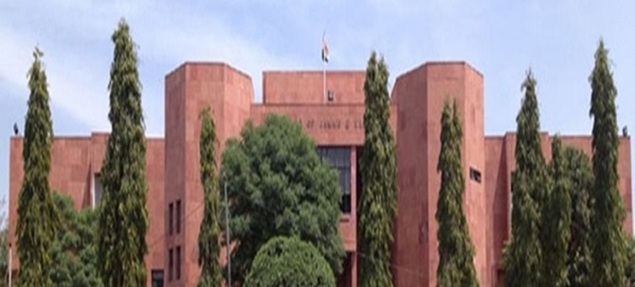
Jammu, Dec 04: The High Court of Jammu and Kashmir and Ladakh has delivered a sharp reprimand to the Union Territory administration, holding that it engaged in “selective implementation of court directions” in the matter of appointments to the posts of Dental Assistant and Junior Dental Technician.
A Division Bench comprising Chief Justice Arun Palli and Justice Rajnesh Oswal dismissed a batch of government appeals, describing them as an abuse of legal process, and imposed costs on the UT.
The dispute stemmed from selections conducted by the Jammu and Kashmir Services Selection Board. Candidates holding a Diploma in Dental Hygienist Training Course were allowed to participate but were later denied appointment on the grounds that their qualification was not the “requisite” one.
Their writ petitions were allowed in August 2017, prompting the administration to file the present Letters Patent Appeals.
The Bench upheld the 2017 judgment in full, noting that the Health and Medical Education Department had itself declared—through a communication dated November 19, 2015, that the Dental Hygienist diploma was an eligible qualification.
On that very basis, an earlier petition was allowed in September 2016 and implemented without objection. Yet, the administration challenged the 2017 judgment based on the same principle, and did so after an unexplained delay of nearly six years, by which time the JKSSB had issued a revised selection list in March 2018.
The Court observed that the UT’s conduct appeared designed to shield lower-merit appointees who lost their positions in the revised list, rather than to uphold the claims of candidates with higher merit who had been kept out of service for seven to eight years.
Citing the Supreme Court ruling in Shivappa v. Chief Engineer (2023), the Bench reiterated that the State cannot apply different standards to similarly placed persons or selectively implement judicial decisions.
In strongly worded remarks, the Division Bench stated that the appeals were “devoid of merit” and a “classic example of the abuse of the process of law”, faulting the administration for its “regrettable disregard” for more meritorious candidates.
Finding no distinction between the cases in which the UT had quietly implemented the Court’s directions and the present one, the judges affirmed that the Single Judge’s 2017 order suffered from no legal infirmity.
All appeals were dismissed, with the Court directing the UT administration to pay costs of Rs 10,000 to each private respondent included in the 2018 revised selection list.
|