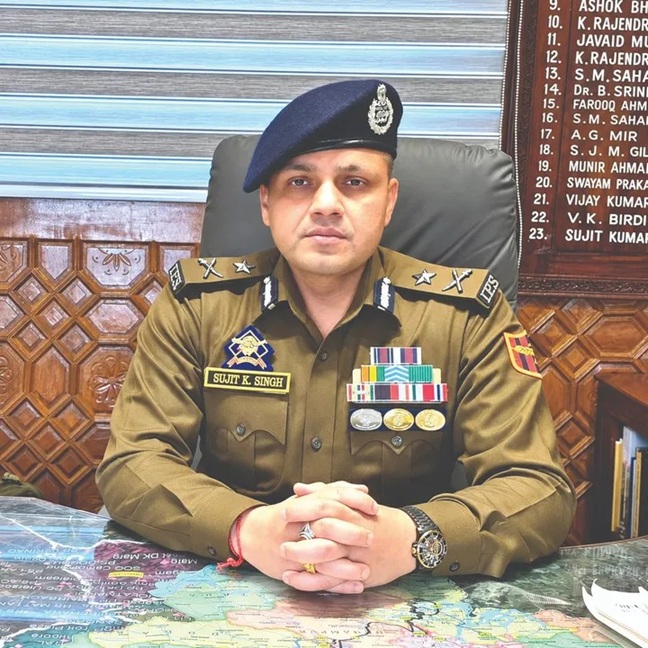
Srinagar, Nov 20: Inspector General of Police, Kashmir Zone, Sujit Kumar chaired a two-hour-long high-level interaction with first-time Munshis of Police Stations and Police Posts across the Kashmir Zone, along with SSPs, ASPs, DySPs and SHOs, issuing clear directives on strengthening grassroots policing through updated beat books, more effective Nakas, and intensified people-to-people contact.
The meeting, held through virtual mode, focused on building the capacity of newly posted Munshis the key record-keepers and operational pivots at police stations and posts — while aligning field leadership on preventive, intelligence-driven and citizen-centric policing.
Senior officers briefed the IGP on ground realities, while Kumar emphasised that every police station and post must function as a responsive, accountable and accessible unit.
The central theme of the conference was to transform traditional beat policing into a proactive, technology-enabled and citizen-oriented system, wherein every Police Station and Police Post functions as an effective centre for public service, crime prevention, community engagement and grievance redressal.
The conference also highlighted the importance of the SMART Policing framework Strict and Sensitive, Modern and Mobile, Alert and Accountable, Reliable and Responsive, and Techno-savvy and Trained. Updated and properly maintained Beat Books .
They are the foundation of preventive policing. Every beat officer must know his area intimately — the people, the patterns, the vulnerabilities and the records must reflect that knowledge accurately and in real time,” IGP Sujit Kumar directed.
He stressed that Beat Books should move beyond routine entries and become living documents that capture local developments, recurring issues and actionable intelligence for supervisors.
On Nakas, the IGP called for their tightening and professionalisation. “Nakas must be intelligence-driven, dynamic and purposeful. They should not become routine hindrances for the public.
The focus has to be on quality checks that yield results against crime and anti-social elements, while ensuring minimum inconvenience to ordinary citizens,” he directed.
Officers were asked to review naka placements, timings and standard operating procedures to enhance effectiveness without disrupting normal life. A strong emphasis was placed on people-to-people contact.
Sujit Kumar instructed that police personnel at every level must step out of stations and posts regularly, interact with residents, address grievances promptly and build trust. “Help people in every situation.
Whether it is a personal difficulty, a community concern or a security-related issue, the police must be seen as a reliable first responder. This is how we strengthen the social fabric and improve the flow of information from the ground .
The IGP also announced that officers and personnel who demonstrate excellence in maintaining records, conducting effective field work, delivering timely public service and producing tangible results will be recognised and rewarded.
Performance will be measured not only by statistics but by the quality of policing and the confidence people have in their local police station. Those who set high standards will be appreciated and incentivised,” Kumar said.
The interaction covered practical aspects of record-keeping, coordination between Munshis and SHOs, supervision by supervisory officers, and the integration of digital tools with traditional beat systems.
Field officers were reminded that the strength of the security grid ultimately rests on the professionalism of police stations and posts.
Special focus was laid on ensuring that every Police Station and Police Post becomes a welcoming and approachable institution where citizens, particularly vulnerable sections of society, receive timely assistance with dignity and respect.
The initiative reflects the broader vision of Kashmir Zone Police to bring about a qualitative transformation in grassroots policing through professional excellence, technological modernisation and sustained community partnership.
The meeting forms part of the ongoing push under IGP Sujit Kumar to institutionalize SMART and Digital Beat Policing principles across the Kashmir Zone emphasising strict yet sensitive conduct, modern and mobile operations, alertness and accountability, reliability and responsiveness, and technology-enabled training.
With first-time Munshis now clear on expectations, the focus shifts to consistent implementation and regular monitoring so that improved beat management, sharper Nakas and stronger public interface translate into visible results on the ground.
|